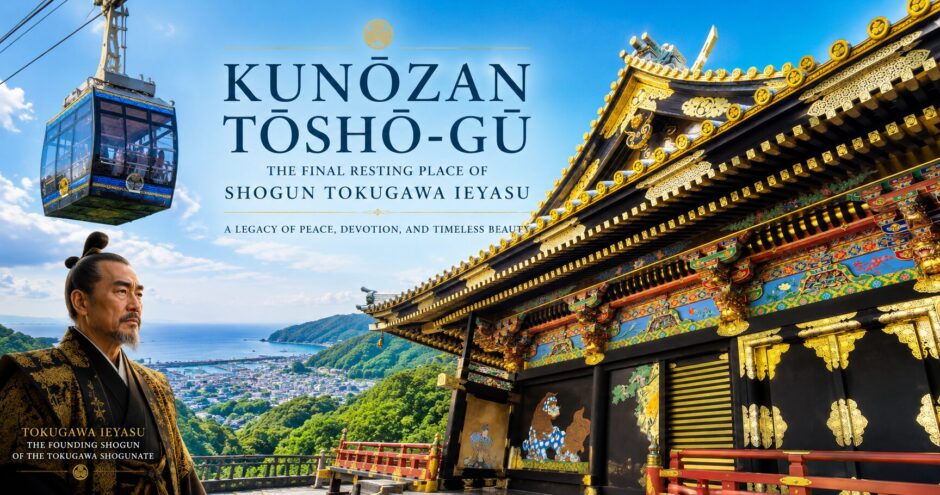
Kunozan Toshogu Shrine, the mausoleum of Tokugawa Ieyasu, is one of the must-visit places in Shizuoka City. You can reach the shrine by ropeway from Nihondaira or by climbing the 1,159 stone steps along the historic approach. In this guide, I’ll introduce the highlights of the shrine and how to get there.
Kunozan Toshogu Shrine is the sacred resting place chosen by Tokugawa Ieyasu, the founder of the Tokugawa Shogunate.
The shrine’s main hall, registered as a National Treasure of Japan, is renowned for its magnificent lacquerwork and vibrant decorations. The museum displays more than 2,000 priceless artifacts associated with Tokugawa Ieyasu and successive shoguns.
If you visit Shizuoka, Kunozan Toshogu Shrine is a must-see destination that offers a fascinating glimpse into Japan’s history, culture, and samurai heritage.
Kunozan Toshogu Shrine is the original Toshogu shrine dedicated to Tokugawa Ieyasu, who is enshrined here as the deity of the shrine.
In his later years, Ieyasu spent his retirement as the retired shogun at Sumpu Castle (Shizuoka), where he passed away on April 17, 1616, after a dramatic and eventful life spanning 75 years.
Before his death, Tokugawa Ieyasu left instructions to his retainers regarding his burial and memorial rites: “Bury my body at Mount Kuno(Shizuoka), hold my funeral at Zojoji Temple in Edo (Tokyo), Place my memorial tablet at Daijuji Temple in Mikawa Province (Aichi), and after the first anniversary of my death, build a small shrine at Mount Nikko in Shimotsuke Province (Nikko) and enshrine me there.“
In accordance with these final wishes, his remains were buried at Mount Kuno, and Kunozan Toshogu Shrine was founded on that sacred site by order of the second shogun, Tokugawa Hidetada.
The Ⅿain Shrine Structures (National Treasure) 御社殿
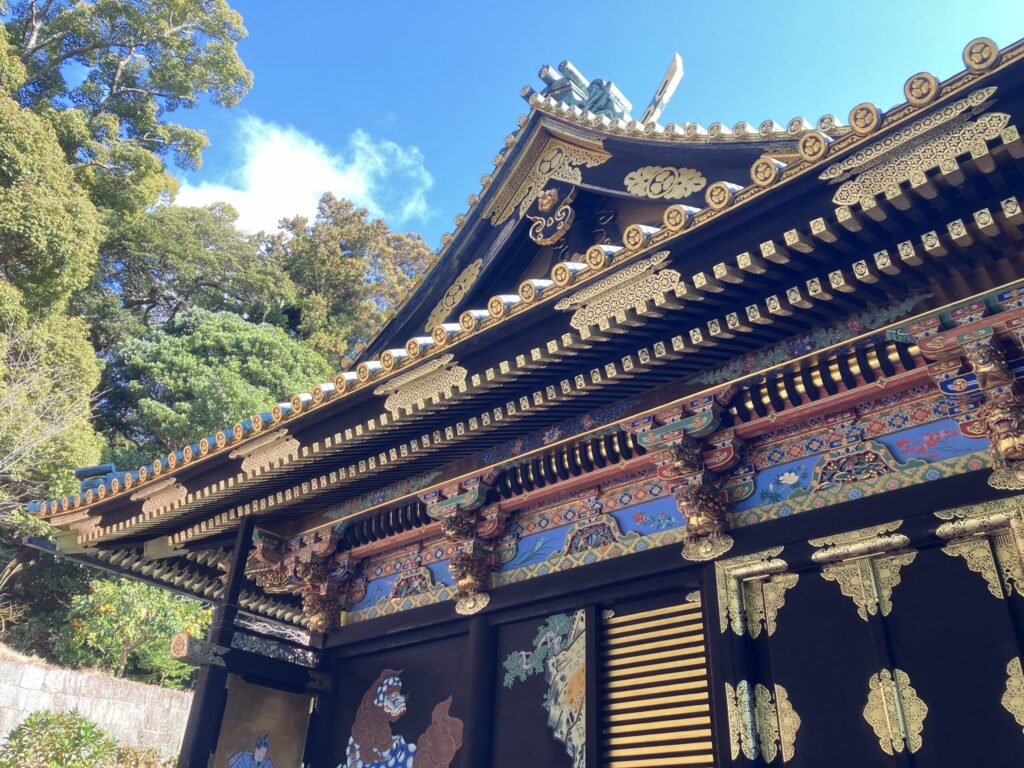
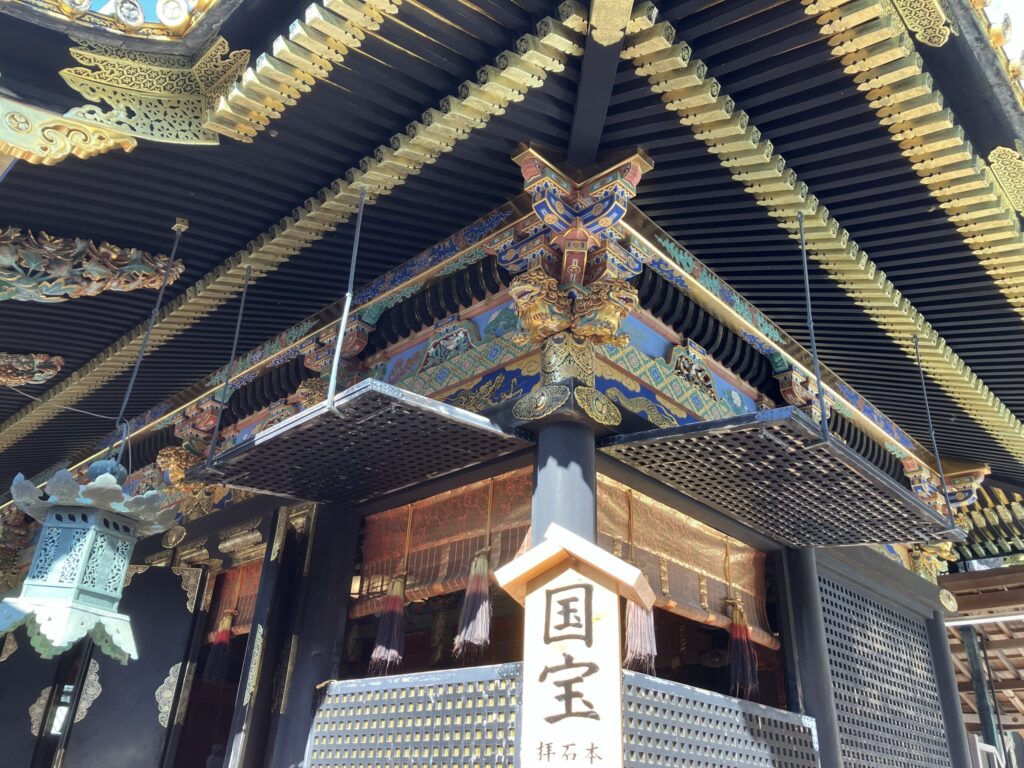
Alongside Tokugawa Ieyasu, the Main Shrine also enshrines Toyotomi Hideyoshi and Oda Nobunaga as accompanying deities. After the Meiji-era Separation of Shinto and Buddhism, they were invited to the shrine as the three leaders credited with ending the Sengoku Period and bringing peace to Japan.
It’s incredible to think that three of Japan’s most famous warlords—Tokugawa Ieyasu, Toyotomi Hideyoshi, and Oda Nobunaga—are all enshrined here as gods!
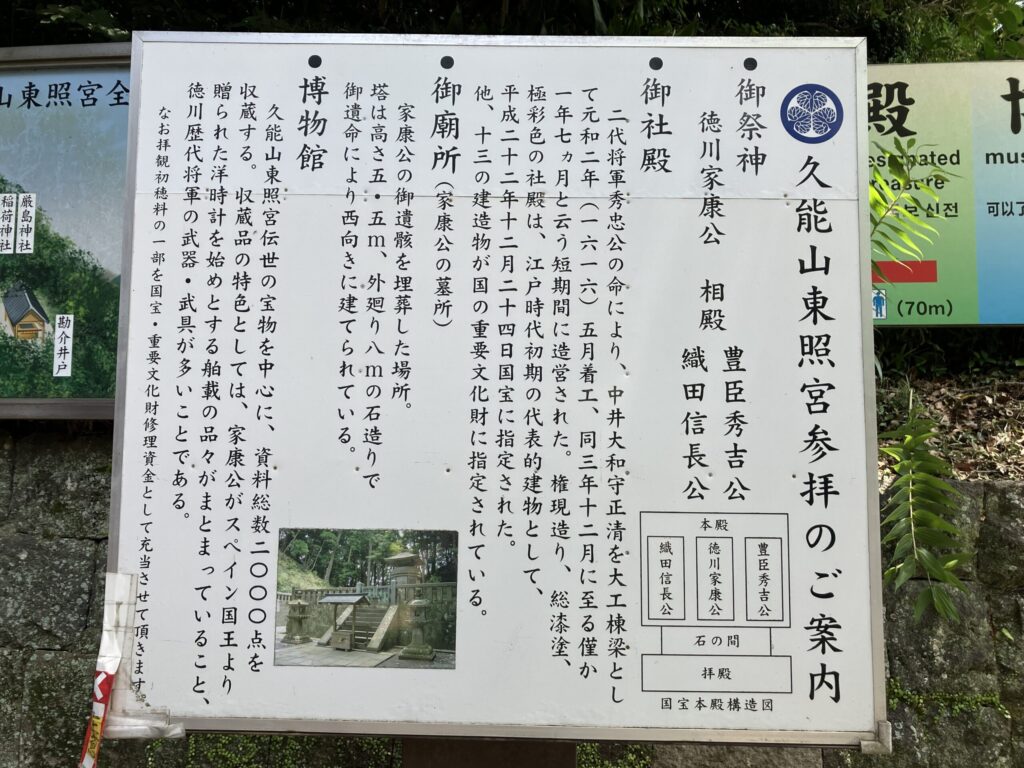
The Ⅿausoleum of Tokugawa Ieyasu 徳川家康公霊廟
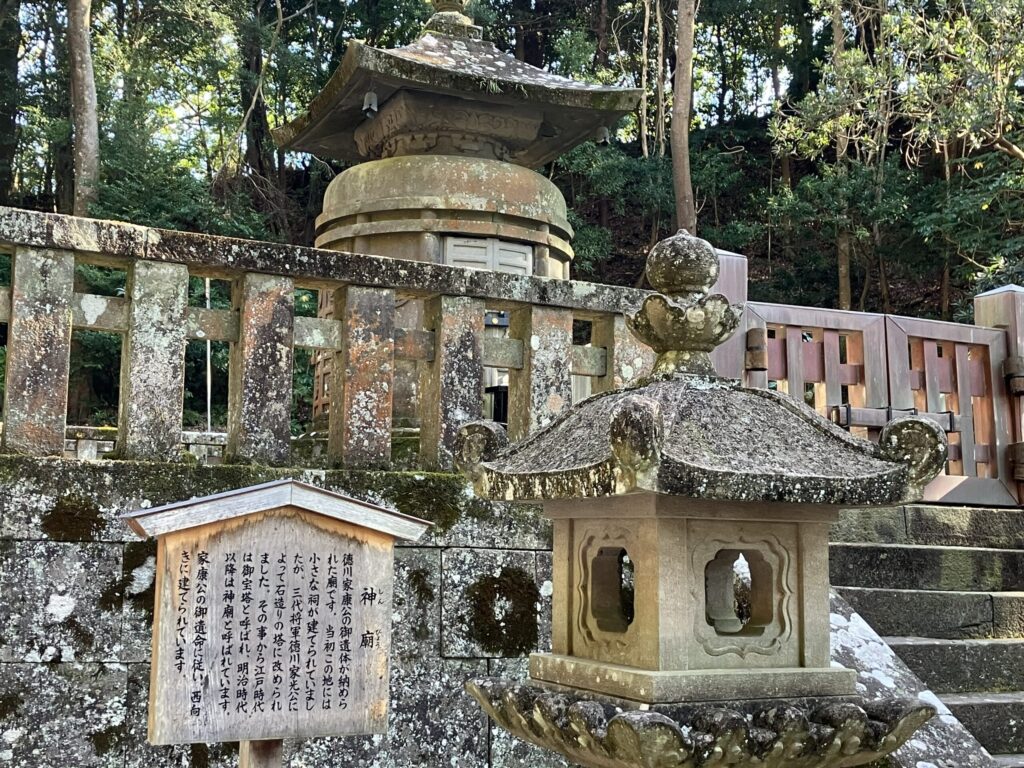
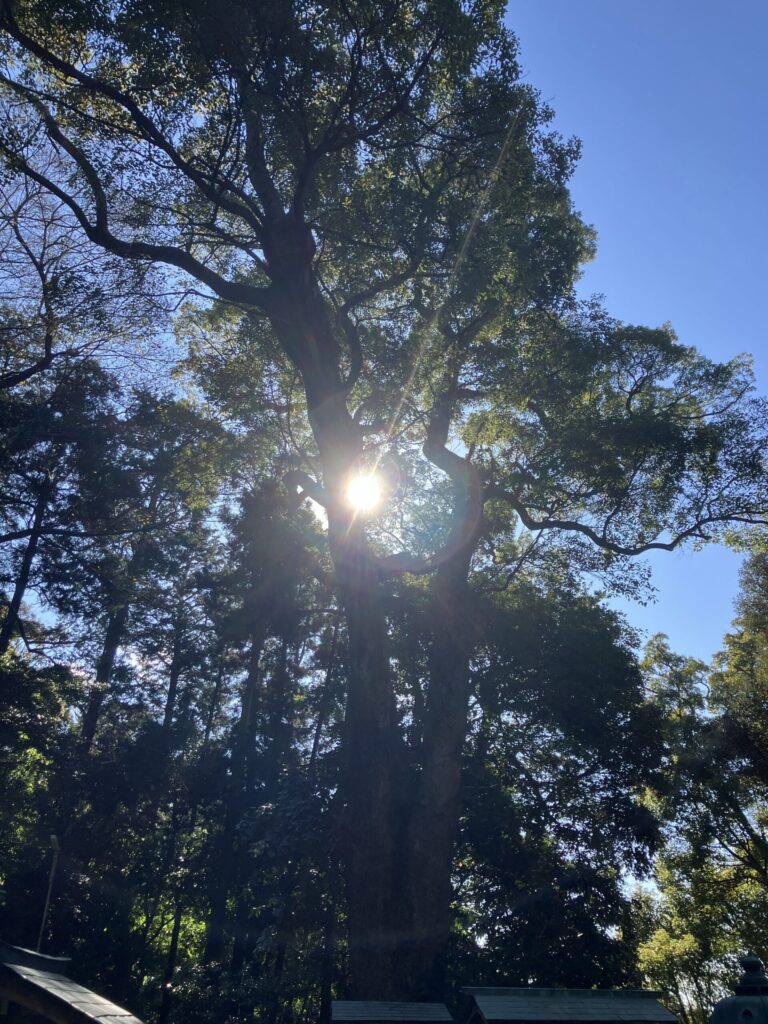
After leaving the ropeway station, a climb of about 100 steps will take you to the mausoleum of Tokugawa Ieyasu. Along the way, you’ll find the famous Money Tree, a symbol of prosperity and good fortune. Many visitors pause to pray at both the tree and the mausoleum.
What Is the Money Tree? A Symbol of Ieyasu’s Teachings
Tokugawa Ieyasu taught three essential virtues: moderation in all things, kindness and compassion, and honesty. He advised his retainers that those who practiced these virtues consistently would be rewarded with prosperity and good fortune.
The Money Tree is based on a Japanese wordplay involving the final sound “ki” (き) in three virtues taught by Tokugawa Ieyasu: “Banji no Yoki” (moderation in all things), “Jihi Fukaki” (kindness and compassion), and “Shojiki” (honesty).
Tokugawa Ieyasu’s Precepts 徳川家康公御遺訓
Here are the famous precepts of Tokugawa Ieyasu.
Life is like a long journey with a heavy burden upon your shoulders—do not hurry.
Accept hardship as a constant companion, and you will never know want.
When desire stirs within your heart, recall the days of struggle and adversity.
Patience is the foundation of lasting peace; regard anger as your greatest enemy.
Those who know only victory and never defeat will eventually bring harm upon themselves.
Judge yourself before judging others.
Better to fall short than to exceed the proper measure.
Visitor Information
- Opening Hours: 9:00 AM – 5:00 PM
- Open Year-Round
- Admission: ¥700
- Museum :¥600
Discounted combination tickets are available at the Nihondaira Ropeway ticket counter.
How to Get There
There are two ways to reach Kunozan Toshogu Shrine:
• Take the ropeway from Nihondaira Plateau.
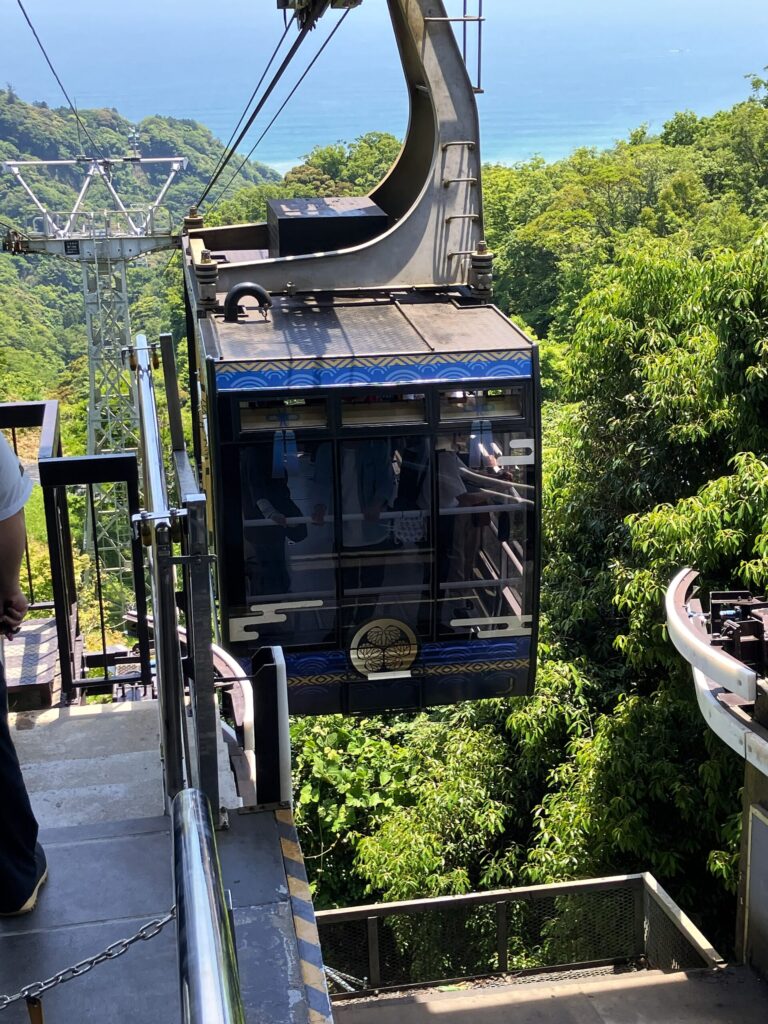
A five-minute ropeway ride from Nihondaira takes you to Kunozan Toshogu Shrine, offering spectacular views of Suruga Bay along the way.
Fare: Round trip ¥1,250 One way ¥700
🚌Take a Nihondaira line bus to Nihondaira Ropeway from JR Shizuoka Station or the Shin-Shizuoka Bus Terminal, next to Shin-Shizuoka Station(Travel time: about 45 minutes. Fare:¥710)
There are only stairs between the ropeway station and Kunozan Toshogu Shrine. Wheelchair access is not available.
• Climb the 1,159 stone steps leading up to the shrine.
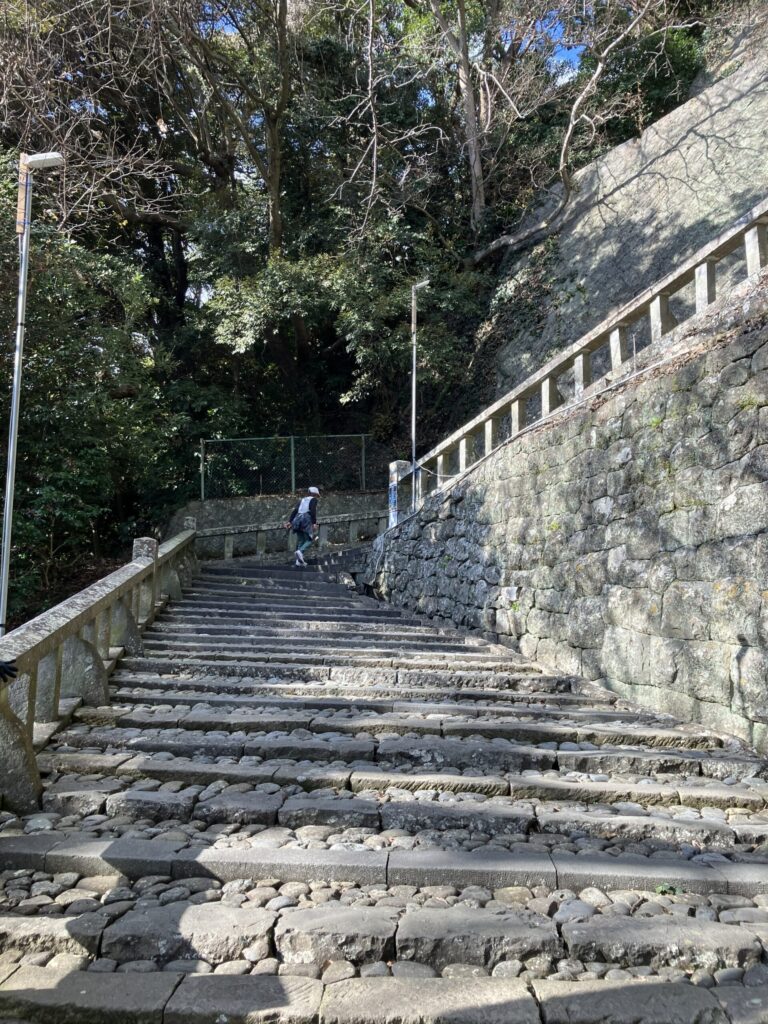
The walk to the shrine buildings takes about 30 minutes. As you climb the stone pathway with Suruga Bay behind you, you’ll be walking uphill under the sun, so it can feel quite hot. Be sure to take breaks and enjoy the shade of the trees along the route.
🚌Take a Yanbara Baiin-ji line bus to Kuno-yamashita bus stop from JR Shimizu Station(Travel time: about 30 minutes Fare: ¥570)
OR
🚌Take a Ishidaikaido line bus from the south side of JR Shizuoka Station to Higashi-oya bus stop, and trasnfer to a bus bound for Kuno-yamashita and get off at the final stop, Kuno-yamashita.(Total travel time: about 40 minutes Fare: ¥750)
OR From Shimizu Port ➡ to the foot of the stone steps
🚖Taxi(About15~20minutes)
If you travel by bus, buses from Shimizu Station run only four times a day, while buses from Shizuoka Station run once an hour.
If you need to call a taxi for your return trip, please check the taxi apps mentioned in my article about Nihondaira.
 Nihondaira: Scenic Views & Easy Access from Shimizu Port
  How to Ride a Bus in Shizuoka: Fares, IC Cards & Tips for Tourists
  How to Pay for Trains and Buses in Shizuoka: IC Cards, Credit Cards & Cash